 English (USA)
 Français
 Türkçe
 Español
 Italiano
 Deutsch
 Nederlands
 Português
 Polski
 Svenska
 Español (Puerto Rico)
 Español (Colombia)
Bars & solid rods
Describe diameter or rectangular section, material grade and cut length for review.
SERVICE 04 / 04
Request cut-to-length preparation for aluminium rod, tube, flat bar and suitable profiles. Provide section dimensions, cut lengths, tolerances and piece quantities for assessment.
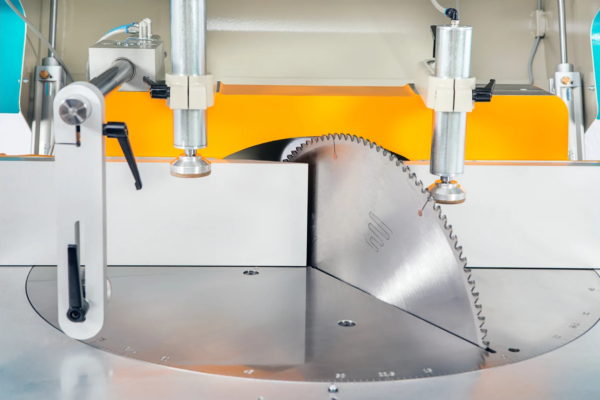
Cut-to-length work is most successful when each section is identified by a profile, cross-section and a clear target length. The finished cut condition matters when parts feed into fabrication or machining.
Specify whether cut lengths are nominal blanks or final dimensions, and whether end-face squareness, burr control or protective packaging is required. Actual cutting and stock options need confirmation.
Plan each stock section by profile, cut length, quantities and end treatment.
Describe diameter or rectangular section, material grade and cut length for review.
State outer section dimensions, wall thickness, requested length and cut requirements.
Supply quantities for each length or a numbered list for several variants.
Ask for batch grouping, piece identification or protective handling if required.
Providing these details at the start makes it easier to assess feasibility and prepare a relevant quotation.
Prepare an enquiryCutting to length normally focuses on the length of an existing section. A reliable schedule lists each material cross-section and every finished length separately, rather than treating a mixed batch as one line.
For a solid aluminium rod, specify diameter; for a tube, give outside diameter or width and height plus wall thickness; for a flat bar, supply width and thickness. Add the alloy and temper.
Record the finished length in millimetres and number of pieces for each variant. Clarify whether the lengths are finished parts or rough machining blanks with additional stock.
State end squareness, burr removal, protective packing and piece identification needs. Kerf loss, cut counts, remnant lengths and shipment grouping may influence a bulk quotation.
Coil-to-length sheet processing is a different operation from sawing rod, tube or flat bar. If your requirement starts with coil stock, specify sheet thickness, width, target length, surface protection and quantity so the correct process can be evaluated.
A transparent four-step quotation workflow—not a promise of confirmed manufacturing capacity.
Specify round rod, tube or flat bar cross-section and material.
Give each finished length, number of pieces and tolerance.
Request deburring, squareness, labeling and packing if needed.
Receive a written quote for the agreed cuts and delivery.
Useful guidance before sending a specification.
Try the aluminium weight calculatorYes, provide a cut schedule with material grade, section, every requested length and the quantity per length. The feasibility and pricing of the schedule will be confirmed.
Cut to length focuses on one principal length dimension of a section such as rod, bar or tube. Cut to size can involve multiple final dimensions of plate or sheet.
These may be requested in the specification, but no particular finishing or packing service should be assumed until confirmed in the quotation.
List each length and quantity, material cross-section, grade and packing requirements. Requests are stored privately and an email notification is attempted.
01 Product, grade and dimensions
02 Drawing revision and tolerances
03 Quantity, destination and documentation
No fixed prices, guaranteed lead times, machine sizes, or tolerances are represented on this page.